
Are you passionate about transforming urban mobility and building sustainable cities? Do you want to turn innovative ideas into viable business solutions that make a real impact? Join the Cargo Bike Revolution Summer School, an intensive, hands-on programme delivered by Ghent University and the Technical University of Berlin.
Over two immersive weeks in Ghent and Berlin, participants will tackle real urban mobility and logistics challenges and learn how to design user-centred, sustainable cargo bike solutions. Through fieldwork, expert-led lectures, workshops, and site visits, you will gain practical experience in problem discovery, solution design, and business model development. Working in international, multidisciplinary teams, you will develop entrepreneurial, leadership, and innovation skills while assessing environmental, social, and economic impacts of cargo bike solutions. By the end of the programme, you will have created a complete, scalable cargo bike business concept and contributed to shaping cleaner, more liveable European cities.
The summer school will equip you with:
- A research-based problem definition and user insights
- A cargo bike service or product concept with a value proposition
- A business model canvas plus an impact assessment
- A pitch deck and jury feedback
- A network of peers, practitioners, and city stakeholders
Don’t miss this opportunity to drive meaningful change and advance your career in urban mobility!

Introduction
While sustainable urban mobility is increasingly discussed, the potential of cargo bikes as a systemic solution for cities remains underused. Cargo bikes are recognised as a clean and space-efficient alternative to vans and cars for last-mile logistics, local commerce and services, yet adoption is still limited. Many initiatives struggle to move beyond pilot phases due to gaps in applied knowledge, entrepreneurial skills, and the ability to integrate solutions into broader urban mobility systems.
Cities are beginning to prioritise sustainable logistics, yet significant challenges persist. Beyond technical feasibility, successful cargo bike solutions must respond to diverse user needs such as affordability, safety, convenience, and accessibility, while aligning with local regulations, spatial constraints, and policy frameworks. Too often, solutions do not balance environmental, social and economic impacts or do not coordinate effectively between municipalities, businesses, NGOs and citizens.
Through this Summer School, we aim to bridge these gaps by equipping participants with the skills and experience needed to transform real urban challenges into viable, scalable cargo bike business models. By combining hands-on fieldwork, interdisciplinary learning, and engagement with practice in Ghent and Berlin, the programme supports the development of innovative solutions that contribute to cleaner, more liveable, and people-centred cities.
Contents & methods
During the Summer School, participants will work closely with academic experts, industry practitioners, and city representatives to develop sustainable cargo bike solutions for urban mobility and logistics challenges. The programme combines applied research, innovation, and entrepreneurship, enabling participants to translate real-world urban problems into viable business models that deliver environmental, social, and economic value. Emphasis is placed on hands-on collaboration, with participants working in international, multidisciplinary teams to address challenges identified in close interaction with local stakeholders in Ghent and Berlin.
The Summer School offers an immersive and practice-oriented learning experience through expert-led lectures, workshops, field visits, and guided teamwork. Participants engage in on-site research, analyse existing cargo bike initiatives, and apply design thinking and systemic innovation methodologies to develop user-centred solutions. Throughout the programme, teams receive mentoring and feedback from experts to refine their concepts. The programme culminates in intermediate and final jury presentations, where participants present their problem analysis, solutions, business models, and impact assessments, receiving structured feedback.
The main goals that will be covered are:
- Understanding urban mobility and logistics challenges and the role of cargo bikes within wider urban systems;
- Translating real city-specific problems into innovative, user-centred cargo bike services or products;
- Developing viable and scalable business models using tools such as the Business Model Canvas and Impact Circle;
- Assessing environmental, social, and economic impacts to support sustainable decision-making.
All lecture and classroom materials are included, and upon successful completion of the program, participants will receive 3 ECTS and a certificate of participation signed by the EIT Urban Mobility.
Is this Summer School right for you?
This Summer School is for those passionate about urban mobility, whether you're a bachelor student, master student, PhD student, early career professional or an experienced professional. The programme welcomes diverse backgrounds, from technical fields like engineering and computer science to social sciences such as sociology, urban planning, and policy.
Who should apply
- Students who want hands-on experience with real urban logistics challenges
- Students interested in sustainable mobility, last-mile delivery and city policy
- Students who enjoy teamwork in international and multidisciplinary groups
What you need
- Motivation to learn through fieldwork and teamwork
- Comfort working in English in a group setting
What you do not need
- Prior cargo bike expertise
- A business degree
If you are interested but unsure about fit, reach out. We can advise how your background can contribute to a strong team.

Information guide and programme
Stay tuned! The programme and guide will be available on this page as soon as they're ready. Check back soon for updates!
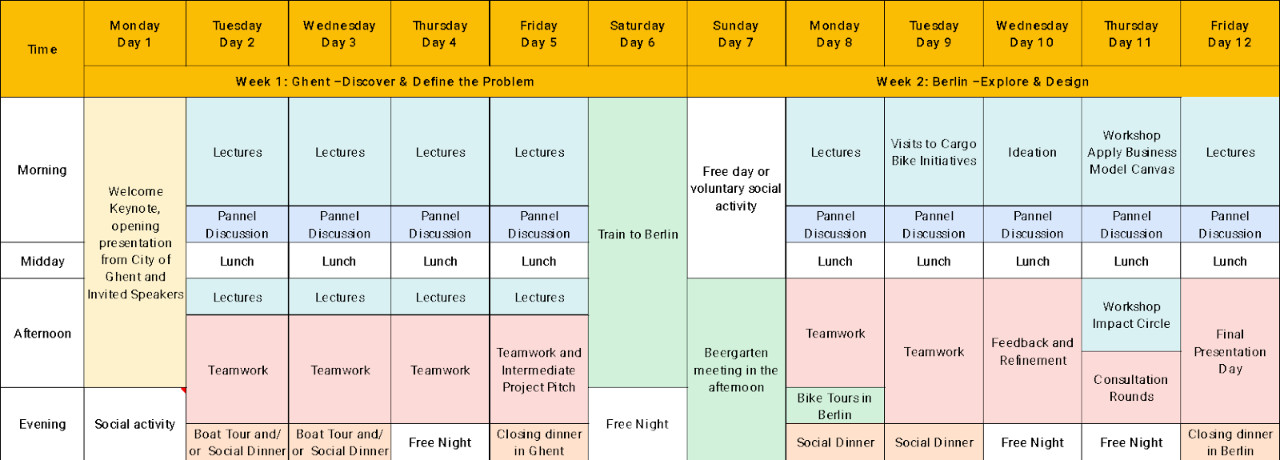
The agenda will follow this general structure:
Dates & locations
The first week of the Summer School will take place in Ghent, Belgium, from 2 to 8 August 2026, and the second week in Berlin, Germany, from 8 to 15 August 2026.

Week 1: Ghent – Discover & Define the Problem
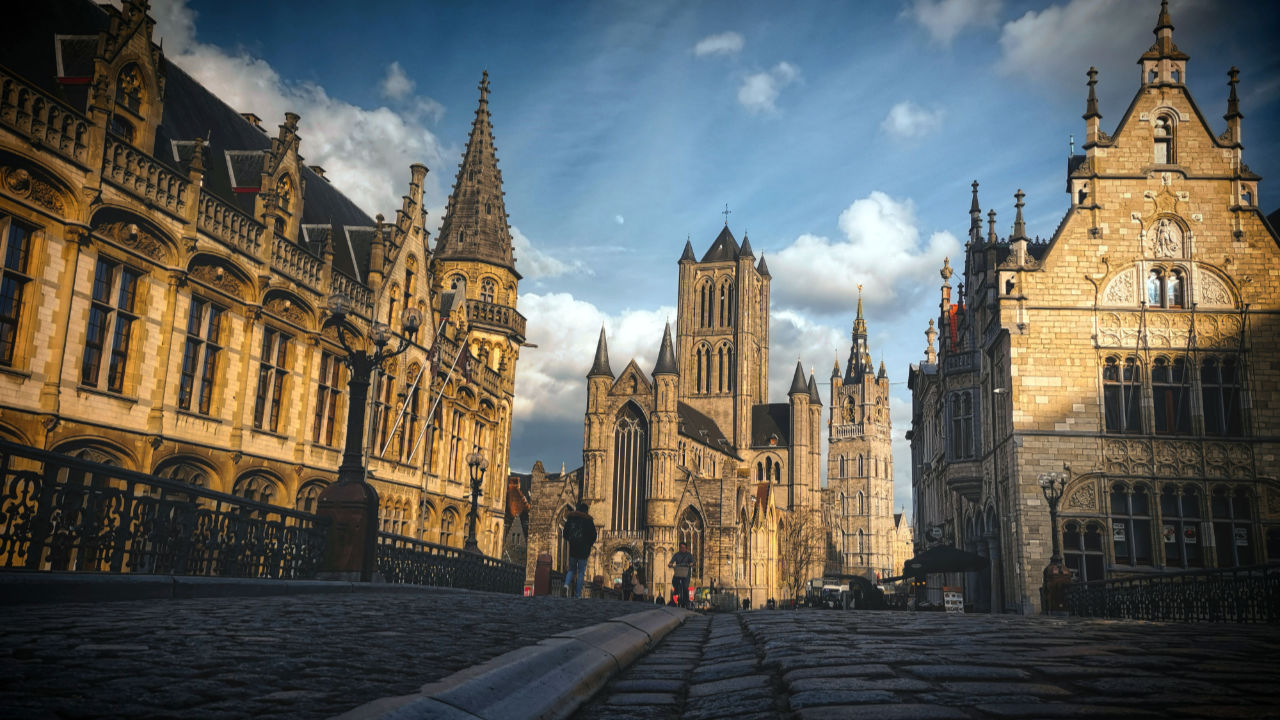
Week 1 in Ghent will be held in the Sint-Baafshuis, located right next to the Saint Bavo's Cathedral, in the heart of the historical city centre, in walkable distance from all major attractions in Ghent. This venue offers an ideal environment to stimulate exciting discussions and facilitate a collaborative learning experience.
Week 2: Berlin – Explore & Design
Week 2 in Berlin will be held at the EUREF Campus at TU Berlin. The campus host research institutions, companies, and start-ups and provides facilities suited for academic and collaborative activities. Its setting supports focused discussions, group work, and applied learning.
Daily rhythm: expect a full day programme on weekdays plus optional evening activities.
Accessibility: Necessary arrangements will be made to accommodate participants with reduced mobility.
Fees
The registration fees include:
- Registration in the course (3 ECTS)
- Course materials and attendance certificate
- Site visits and practitioner sessions
- Mentoring and jury feedback
- Social programme activities
- Most meals during programme days
- Transport from Ghent to Berlin
- Accommodation (with extra fee)
Participants remain responsible for covering their own travel costs to reach Ghent, Belgium, before the beginning of the Summer School and to leave from Berlin, Germany, after the end of the programme.
| Registration fees | Early bird 1 | Regular |
|---|---|---|
| Practitioners / Professionals | 1700 EURO | 1900 EURO |
| Regular students | 1250 EURO | 1400 EURO |
| EU students | 1050 EURO | 1200 EURO |
| Students from low/medium income countries2 | 800 EURO | 950 EURO |
| TUB and UGent students | 400 EURO | 550 EURO |
| Extra for accommodation in Ghent (double shared room)3 | 460 EURO | 460 EURO |
| Extra for accommodation in Berlin (double shared room)4 | 350 EURO | 350 EURO |
- 1 Early bird deadline is on May 31, 2026.
- 2 Countries in low/lower-middle/upper-middle categories are eligible for the reduced fee. The full list can be found here.
- 3 The accommodation fee in Ghent covers six nights in a double shared room with breakfast, check-in on 2 August, and check-out on 8 August.
- 4 The accommodation fee in Berlin covers seven nights in a double shared room with breakfast, check-in on 8 August, and check-out on 15 August.
You may be able to use Erasmus+ short-term mobility funding, subject to approval by your home university. Please contact your university’s international/Erasmus office as early as possible and ask whether participation in the 3 ECTS Cargo Bike Revolution Summer School can be funded and recognised through Erasmus+ short-term mobility. The summer school organisers can provide confirmation documents if needed.
Accomodation
Details on accommodation will be confirmed closer to the event date.
What you can expect:
- Shared double rooms with breakfast for the add-on option
- Locations with practical access to the teaching venues
How to apply
To apply, complete the application form by June 30, 2026 and upload:
- CV
- short motivation letter explaining your interest and what you hope to learn
Please note that spots are limited, so we encourage you to secure your place soon.
For early bird fee benefits, register by May 31, 2026!
Note 1: Participants requiring a Schengen visa to travel to the EU should apply no later than May 31, 2026.
Note 2: For applications without accommodation, the registration deadline is more flexible, and late applicants could be still admitted if space in the summer school is still available. Contact the organisers by email if you want to apply after June 30.
Study credentials
The summer school has a value of 3 ECTS credits. To include the credits in the curriculum at the home institution, participants need an agreement with the responsible person at their university. A certificate of participation will be awarded at the end of the programme.
Contact
If you have any questions, please do not hesitate to contact us:
Organizing team
- Giovanni Circella, Ghent University
- María Alejandra Gaitán, Ghent University
- Alessandro La Delfa, Ghent University
- Hasan Al Banna, Ghent University
- Gabrielle Ann Tsatourova, Ghent University
- Massimo Moraglio, TU Berlin
- Nora Bonatz, TU Berlin
- Maike Leidecker, TU Berlin
- Natalia Botero, TU Berlin

Webinar
To help you discover the programme, there was an info webinar on 13 May 2026.
You can download and (re)watch it here.
Our summer school is officially listed on Summer Schools in Europe. Discover more here.


Social activities
Ghent: Boat and bike toursAs part of the social activities, participants will explore Ghent, known for its blend of medieval history and modern energy. Participants will join a boat tour along the canals and can choose between walking tours and bike tours. These activities also support mobility observation and discussion in real-world contexts.
A visit to a traditional Berlin Biergarten, an outdoor beer garden and social gathering space, is included as a social activity in the summer school program. This informal setting allows participants to relax, connect with peers, and network in a local and culturally authentic environment.
Networking focus: social activities are designed to help teams connect, reflect on field insights, and build peer networks.